Every shopper has context
The right size can depend on comfort, style preference, product category and how the shopper expects the item to fit.
Conventional sizing tools often work from averages, broad inputs or generic size charts. Zizr is built for the actual shopper and the actual item, giving customers clearer guidance directly on the product page without asking for weight, body photos or measurements.
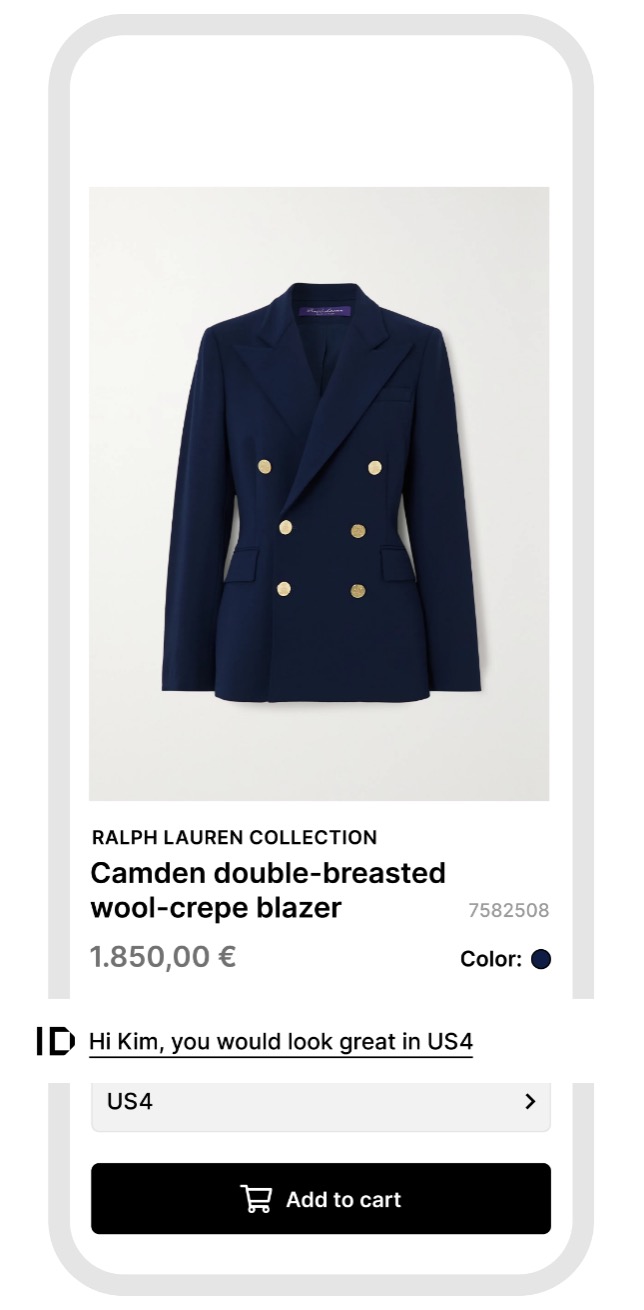
Fashion fit is personal and contextual. Zizr is different because it treats the size decision as an individual product-page moment, not a broad average to apply across every shopper.
The right size can depend on comfort, style preference, product category and how the shopper expects the item to fit.
A garment can technically fit and still feel wrong. Guidance needs to respect how shoppers actually make the decision.
Two shoppers with similar measurements can want different fits. Zizr is designed to support individual choice, not reduce people to averages.
Zizr does not assume a shopper has one fixed size across a brand. The same customer can receive different recommendations when product details change.
Two products from the same brand can behave differently in size because model, cut, fabric and category differ.
Zizr reads product context such as category, size options, cut, fabric and available fit signals before making guidance useful.
A blazer, dress, trouser and shoe can each create different size questions, even for the same shopper.
A better size experience should not make shoppers feel measured or judged. Zizr is designed to give guidance without awkward personal friction.
Zizr does not need to ask shoppers for weight to support a product-page size decision.
The shopper does not need to upload images of their body to get guidance.
Zizr avoids turning the buying journey into a measurement exercise.
The experience focuses on useful fit signals and product context, with GDPR-aware implementation practices.
Zizr is different because it improves the moment where the shopper is already deciding, instead of sending them into a separate sizing task.
The recommendation appears near the size selector, close to the buying decision.
Shoppers get a size recommendation that is tied to the item they are viewing.
Clearer guidance can help shoppers add to cart with less hesitation where useful fit signals are available.
Zizr is not only a size chart replacement. It can help retailers build a more useful product-page experience over time.
Product, purchase, return and feedback signals can make guidance more useful where those signals are available.
As useful signals build over time, the product-page experience can become more relevant for returning shoppers.
Stores can understand which products, categories or fit contexts need clearer guidance.
Zizr is designed to start with the recommendation layer and grow from there, without forcing a full platform rebuild.
Shopify stores can start through the app path and review how recommendations fit the theme, catalog and product pages.
For other ecommerce stacks, Zizr can review API, storefront and data-flow needs before recommending the right setup.
Zizr is built around individual shoppers and item-level decisions. It focuses on guidance near the size selector instead of relying only on generic size charts, averages or intrusive body inputs.
No. Zizr is designed to avoid weight requests, body photos, measuring tape steps and awkward body questions.
Yes. Recommendations can differ because model, cut, fabric, category and size behaviour can vary within the same brand.
No. Shopify is the fastest route for many stores, but Zizr can also support custom ecommerce platforms through integrations, API or scoped setup.
No. Zizr is designed to support product-page recommendations without forcing shoppers into an account flow.
Zizr starts with product and catalog context, then reviews available fit signals such as size options, purchase history, return history and feedback where appropriate.
Zizr uses a privacy-respecting approach and GDPR-aware implementation practices. The shopper experience avoids weight and body photos.
Share your platform and catalog context. Zizr can show how item-level recommendations fit your product-page experience.